❋
Decoding Genetics: Precision Child Health at SickKids
A series of modular animations designed to help parents of children with rare genetic conditions better understand genetics and emerging treatment pathways, turning complex information into something clear, supportive, and accessible.
This project proposes a modular animation system that breaks down complex genetic concepts into clear, self-contained visual segments. Each module is designed to communicate a specific idea, allowing information to be delivered flexibly, whether within clinical settings or as a resource parents can revisit over time.
-
Parents of children with rare genetic diseases
-
Illustrator, Maya, After Effects
-
Dr Derek Ng and Dr Gregory Costain
The Final Animation
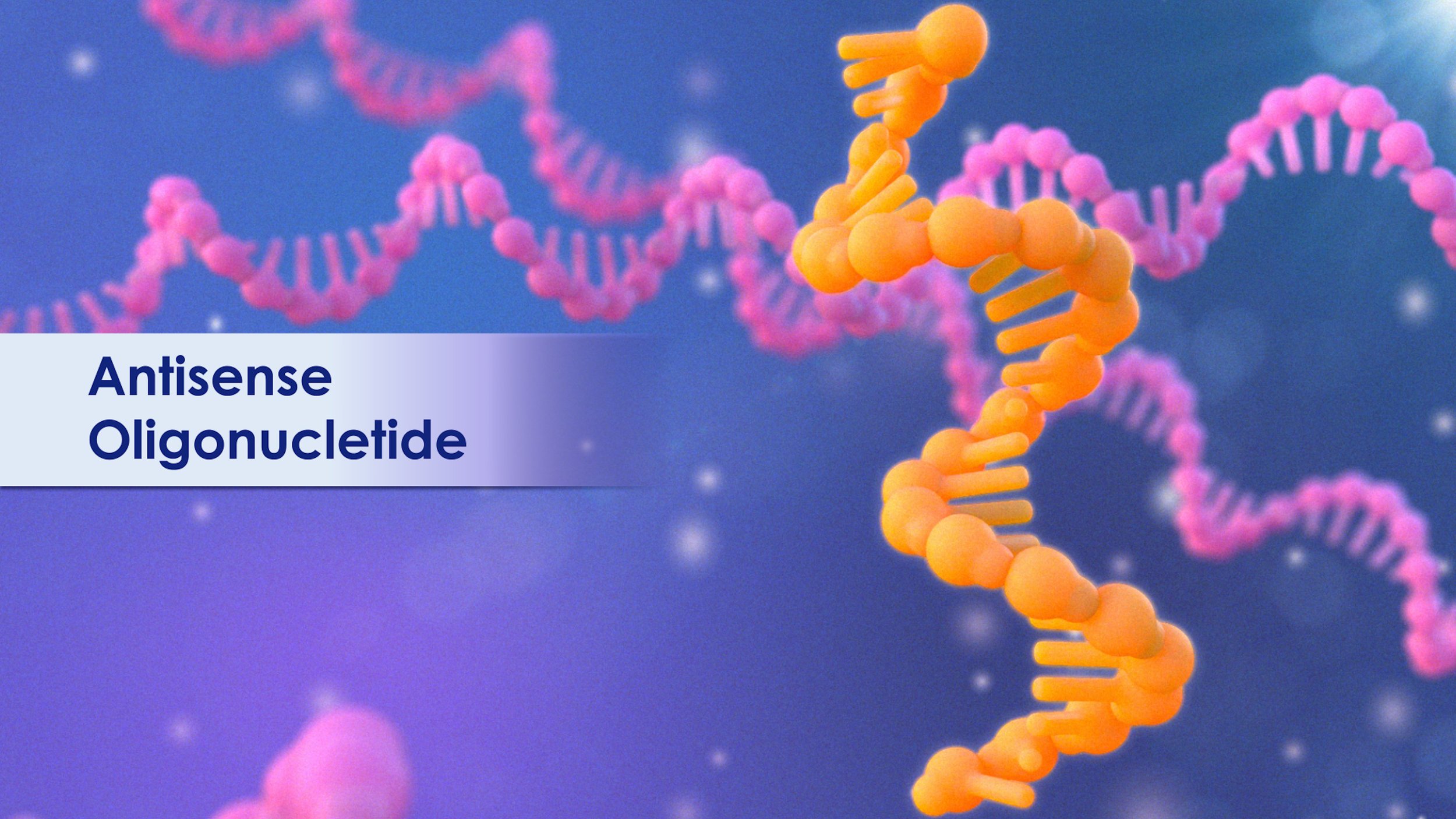
Decoding Genetics is an educational platform designed to transform complex molecular genetics into an engaging visual learning experience. Created as my Master's Research Project in Biomedical Communications, the project combines cinematic scientific animation with an interactive companion website to support patient education for families affected by rare genetic diseases.
The animation simplifies topics including DNA, gene expression, genetic variants, and antisense oligonucleotide (ASO) therapies using a blend of stylized 2D graphics and scientifically accurate 3D molecular animation. The companion website expands on the learning experience with transcripts, supplementary resources, and modular educational content, creating a self-paced resource that viewers can revisit as their understanding grows.
This project demonstrates an end-to-end production pipeline, from user research and educational strategy to scripting, storyboarding, 3D animation, sound design, and front-end web development.
Skills: Scientific Animation • Medical Illustration • Motion Design • Storyboarding • 3D Modelling • Maya • Adobe After Effects • Premiere Pro • Web Design • HTML/CSS/JavaScript • User-Centred Design • Science Communication
❋ Reduces Educational Burden in Clinical SettingsDesigned to support genetic counsellors by offloading foundational education, this tool helps streamline appointments, allowing more time for meaningful, personalized conversations with families.
❋ Improves Accessibility of Genetic LiteracyTransforms complex genetic concepts into clear, visual explanations that are approachable for non-specialist audiences, making essential information easier to understand and retain.
❋ Extends Learning Beyond Clinical Encounters
Gives parents a resource they can revisit in their own time, helping reinforce understanding and reducing the pressure to absorb complex information during a single appointment.
❋ Bridges the Gap Between Research and Patient UnderstandingTranslates emerging therapies and rapidly evolving research into accessible, digestible content, helping families better understand potential treatment pathways and what they mean in real terms.
Informed by Clinical Practice
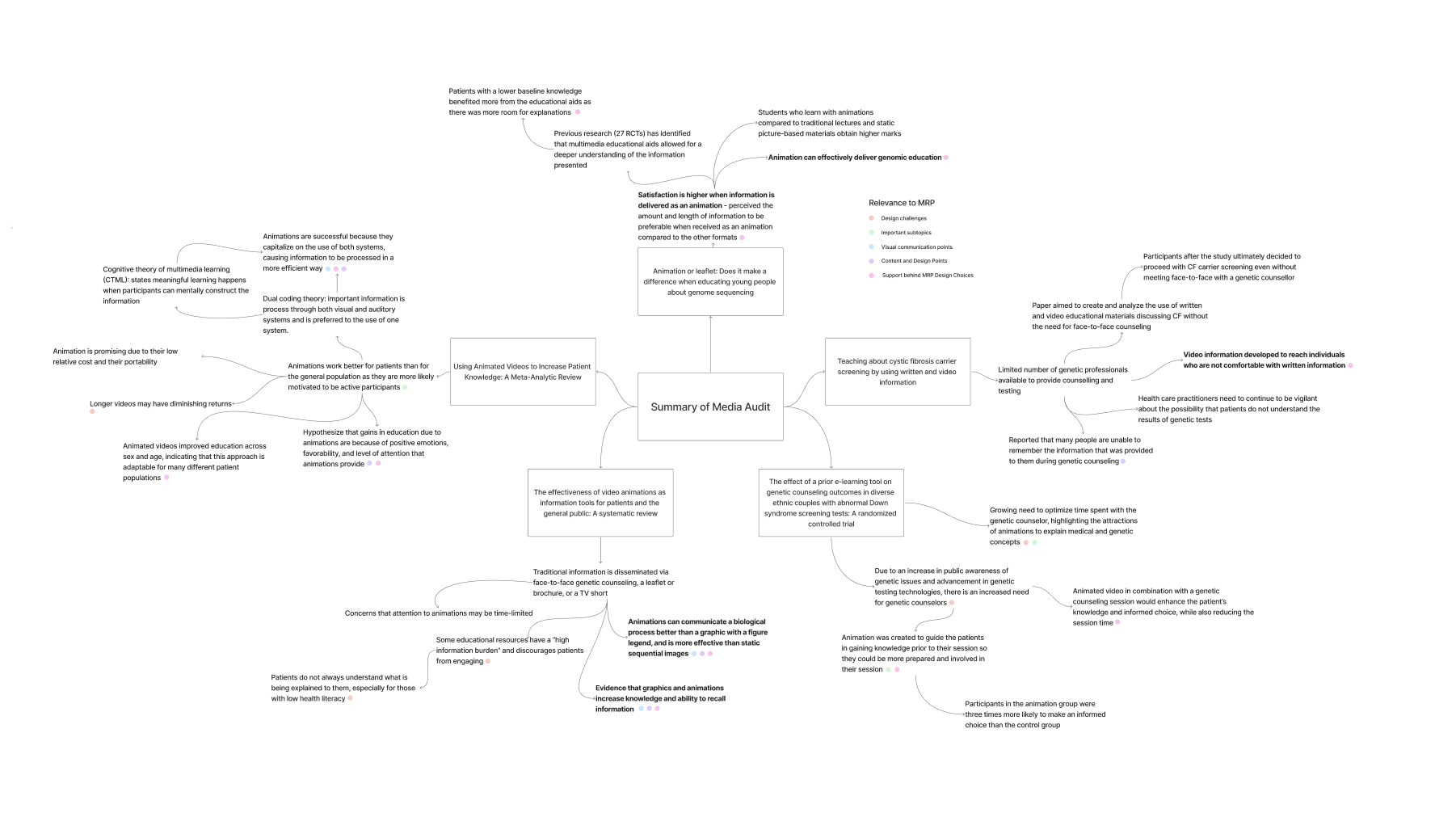
This project was shaped through input from clinicians and genetic counsellors to ensure the content reflects real challenges in practice. Interviews were conducted based on questions developed from an initial review of relevant literature, focusing on how genetic information is currently communicated and where gaps in understanding commonly arise.
Insights from these conversations were synthesized through affinity mapping, revealing key patterns in the difficulties parents face and the constraints clinicians encounter during appointments. These findings directly informed the structure and scripting of the animations, ensuring the content addresses the most critical areas of confusion while supporting more effective, patient-centered communication.
Why Modular Animation?
Rather than presenting information as a single linear narrative, this project uses a modular approach, breaking content into focused segments that can be viewed independently or as a sequence. This allows for greater flexibility in how information is delivered, making it easier to tailor content to individual needs and avoid overwhelming users with too much information at once.
The following animatic explores the visual language, pacing, and structure of the modular animation system, demonstrating how complex genetic concepts can be divided into focused, accessible segments for parents.
Proposed Visual System
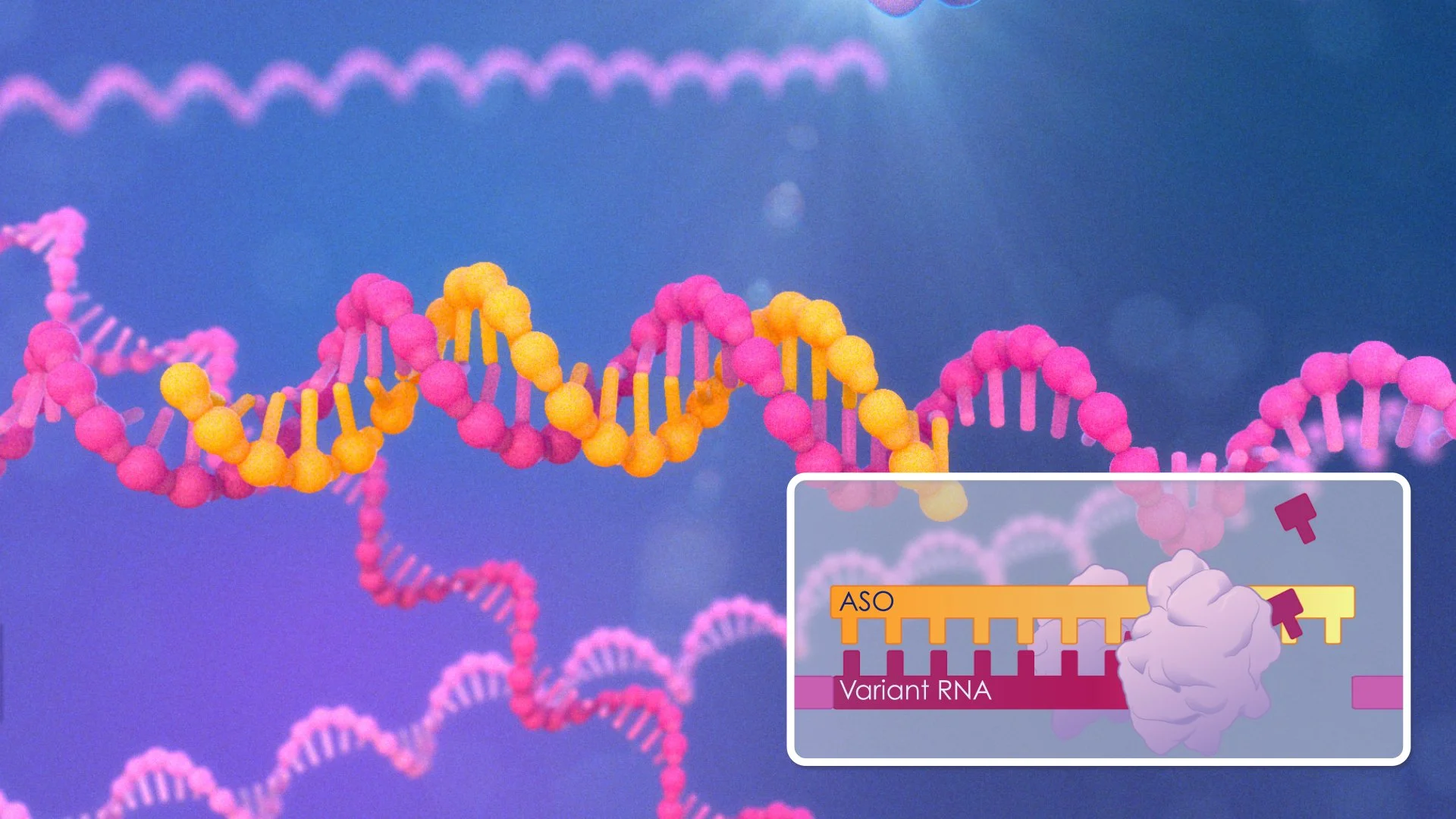
The final animations combine immersive 3D environments with simplified 2D schematic sequences. This dual approach is designed to balance engagement with clarity—using 3D visuals to provide context and spatial understanding, while 2D elements introduce key concepts and reduce cognitive overload for non-specialist audiences.
❋ 3D Animation — Context & Engagement
Gives parents a resource they can revisit in their own time, helping reinforce understanding and reducing the pressure to absorb complex information during a single appointment.
❋ 2D Schematic Animation — Clarity & Reinforcement
The 2D animations translate the same concepts into simplified, diagrammatic visuals. By stripping away complexity and focusing on key mechanisms, these sequences reinforce understanding, support knowledge retention, and provide a clear reference point for parents who may find fully immersive environments overwhelming.